White Negroni Recipe | Gin, Suze and Lillet Blanc

12×75
Cocktails / Negroni family
White Negroni Recipe: Gin, Suze and Lillet Blanc
The Negroni with the red taken out. Gin stays. Campari becomes Suze. Sweet vermouth becomes Lillet Blanc. It was invented in a Bordeaux liquor store the day before a cocktail competition, and the original is equal parts. The version I actually make is 3:2:1.
By Vim, Editor of 12×75
The short answer
- My ratio: 3 parts gin, 2 parts Lillet Blanc, 1 part Suze.
- Single drink: 1½ oz gin, 1 oz Lillet Blanc, ½ oz Suze.
- The original: equal parts, 1:1:1, as Wayne Collins made it in 2001.
- Method: stir with ice, strain over one large cube.
- Garnish: grapefruit peel, which Collins specified and which matters more than you would expect.
- Taste: bitter, floral, citrusy, rooty, and considerably paler than a classic Negroni.
3:2:1
Gin : Lillet Blanc : Suze
Same idea as a Negroni, with the gentian turned down just enough to let the gin and the wine breathe.
Of all the ways to change a classic Negroni, this is the one that earned the name. You keep the gin, the method, the glass and the equal-parts logic, and you replace both of the other ingredients, which should produce a different drink entirely and somehow does not. What it needs is a gin with a spine and, ideally, something decent to drink it out of. The rest is two French bottles and a grapefruit.
It was invented in a liquor store
This is a modern drink with a precise birthday, which is rare. In 2001 the London bartender Wayne Collins was in Bordeaux for Vinexpo, the wine and spirits fair, to compete in the Drinks International cocktail competition. He was travelling with Nick Blacknell, then brand director of Plymouth Gin. The day before the contest they went looking for ingredients, wanted a Negroni, and Collins decided to build one entirely from French parts. Suze for the Campari. Lillet Blanc for the sweet vermouth. Plymouth gin because that is what they had back at the guest house.
It was not an instant hit. Most bars did not stock either bottle. Simon Ford, then Plymouth’s ambassador, took it to Audrey Saunders at the Pegu Club in New York, where it finally caught, and it did not really arrive in America until Suze was imported there in 2012. Twenty-five years on it is the best-known variation of the classic Negroni and the only one that changed two of the three ingredients and kept the name.
Three French ingredients, bought in a hurry, the day before a competition. Most great drinks are less deliberate than they look.
Original or modern? Make both once
Wayne Collins, 20011:1:1Gin : Suze : LilletHistorically correct and intensely bitter. Gentian gets a full third of the glass and has no intention of being background music. Make it once so you understand the drink.
The 12×75 house pour3:2:1Gin : Lillet : SuzeMore gin, less gentian, more room for citrus and wine. Still unmistakably a White Negroni, and much easier to love on the first glass.
Difford’s Guide, which has been at this longer than most, came to the same conclusion I did: Collins used equal parts, and after trying various other formulations, a gin-forward split works better. That is not a criticism of the original. Suze is simply stronger-flavored than Campari, so a third of the glass is a lot of it.
The recipe
3Gin
2Lillet Blanc
1Suze
One drink, 3:2:1
Plymouth or London dry gin1½ oz / 45 ml
Lillet Blanc1 oz / 30 ml
Suze½ oz / 15 ml
Grapefruit peel1 strip
Scaling it up
DrinksGinLilletSuze
11.5 oz / 45 ml1 oz / 30 ml0.5 oz / 15 ml
23 oz / 90 ml2 oz / 60 ml1 oz / 30 ml
46 oz / 180 ml4 oz / 120 ml2 oz / 60 ml
69 oz / 265 ml6 oz / 180 ml3 oz / 90 ml
812 oz / 355 ml8 oz / 240 ml4 oz / 120 ml
1218 oz / 535 ml12 oz / 355 ml6 oz / 180 ml
Batching: add water at about 25% of the total volume, chill hard, and pour over ice without stirring again.
How to make it
1Add all three to a mixing glass. Gin, then Lillet, then Suze. The order does not matter. The measuring does.
2Fill generously with hard ice. More ice chills faster and gives you better control of dilution than four sad cubes.
3Stir 20 to 25 seconds. Cold, integrated and diluted. Not aerated.
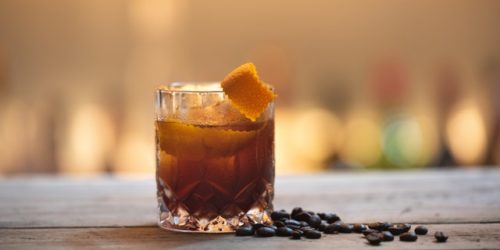
4Strain over one large cube. A chilled rocks glass is my default; up in a coupe makes it sharper and more formal.
5Express grapefruit oil over the top. Collins specified grapefruit and Difford’s calls it essential to the recipe. Lemon works and is cleaner, but grapefruit is the original and it echoes the gentian.
Do not shake it. No juice, no egg, no dairy, nothing that needs aerating. This is a stirred, spirit-forward drink and shaking will cloud it.
What it actually tastes like
Do not expect a Negroni with the color removed. A classic is orange-led, rich and red-fruited. This is paler, more floral and far rootier. Suze brings the unmistakable snap of gentian, which is earthier and more direct than Campari’s bitter orange. Lillet Blanc brings wine, citrus and just enough sweetness to stop the bitterness turning medicinal. The gin gives it a spine.
The result is bitter, floral, citrusy, herbal and dry. It looks delicate in the glass. It is not delicate.
White Negroni vs classic Negroni
The swap, line by line
Classic NegroniWhite Negroni
SpiritGinGin
BitterCampari, 24% ABVSuze, 15% ABV
WineSweet red vermouthLillet Blanc
ColorRubyPale yellow gold
BitternessOrange, herbalGentian, earthy, rooty
GarnishOrangeGrapefruit
Starting ratio1:1:13:2:1, or 1:1:1 for the original
The three bottles
The spineGinPlymouth is historically correct and beautifully rounded, since it is what Collins used. A London dry such as Tanqueray, Beefeater or Sipsmith gives more obvious juniper and citrus. My best gin guide has the full argument.
The softenerLillet BlancWine-based, floral, citrusy, 17% ABV. It does the job sweet vermouth does in a red Negroni without the dark spice or the weight. Refrigerate after opening; it is wine.
The troublemakerSuzeThe defining ingredient, and a French gentian aperitif at about 15%. Earthier and more direct than Campari. At a third of the glass it dominates; at half an ounce it still refuses to disappear.
Lillet Blanc or Cocchi Americano?
Lillet BlancUse this for the canonical version.Floral, citrusy, comparatively soft. It keeps the gin and the Suze clearly separated instead of adding a third bitter voice.
Cocchi AmericanoUse this when you want more bite.More quinine-like bitterness and herbal complexity. Excellent, but with Suze already present the result is noticeably firmer and more adult.
For the Cocchi version, keep the same framework: 1½ oz gin, 1 oz Cocchi Americano, ½ oz Suze. And a useful piece of trivia: swap Suze for Cocchi entirely and the drink actually goes clear, which is the only way to make a White Negroni that is genuinely white.
Can you make it without Suze?
Yes, but you are leaving the Collins drink and entering the wider world of pale Negronis. The gentian family is where to look first.
ClosestSalersA French gentian aperitif and the first substitute I would reach for. Lighter and slightly more floral than Suze.
Also gentianAvèzeStill unmistakably gentian, so the drink keeps the earthy bitterness that defines it.
Different drinkLuxardo Bitter BiancoA clear bitter aperitivo, delicious here, but it makes something closer to a Negroni Bianco than a White Negroni.
White Negroni or Negroni Bianco?
They overlap and the names get used interchangeably, but they are worth separating. White Negroni means the Collins drink: gin, Suze, Lillet Blanc. Negroni Bianco is better treated as the broader pale-Negroni category: gin, a clear or pale bitter aperitivo, and a white or bianco aromatized wine. Someone searching for a White Negroni almost always wants Suze. Someone searching for a Negroni Bianco may be perfectly happy with Luxardo Bitter Bianco and bianco vermouth.
How strong is it, and how many calories?
Stronger than it looks, which is the recurring theme of pale drinks. Difford’s puts the equal-parts original at about 20.6% ABV in the glass, 1.3 US standard drinks and 161 calories. My 3:2:1 version carries more gin and less Suze, so it lands slightly stronger and slightly leaner, somewhere in the low twenties for ABV and around 150 to 170 calories.
Roughly what you are drinking
Per drink
ABV before dilutionHigh twenties
ABV after a standard stir~20 to 22%
Pure alcohol~18.6 g, about 1.3 US standard drinks
Calories~150 to 170
Difford’s figures for the equal-parts original; the rest are estimates for the 3:2:1 build. Bottle strengths vary, so treat these as comparisons rather than nutrition data.
Variations worth knowing
SmokyMezcal White NegroniMezcal for gin. Keep the Suze restrained: smoke plus gentian is already a loud conversation.
More bitterCocchi White NegroniCocchi Americano instead of Lillet, same volume, for a quinine-driven bite.
LighterWhite Negroni SpritzA smaller base lengthened with sparkling wine or soda. Much easier in the sun.
Pale bitterNegroni BiancoMove from Suze toward a clear bitter aperitivo and pair it with bianco vermouth.
PartyBatchMultiply 3:2:1 by your guest count, pre-dilute with 25% water, bottle it cold.
OriginalEqual partsOne ounce each. Make it at least once. It explains exactly why the modern ratio evolved.
White Negroni FAQ
What is in a White Negroni?
Gin, Suze and Lillet Blanc. The 2001 original uses equal parts of all three; my house version is 3 parts gin, 2 parts Lillet and 1 part Suze.
Who invented the White Negroni?
British bartender Wayne Collins, in 2001, while in Bordeaux for Vinexpo with Nick Blacknell of Plymouth Gin. He wanted to build a Negroni from entirely French ingredients.
What replaces Campari in a White Negroni?
Suze, a French gentian-root bitter aperitif at about 15% ABV.
What replaces sweet vermouth?
Lillet Blanc, a pale French wine-based aperitif at about 17% ABV.
Is a White Negroni actually white?
No, it is usually pale yellow or gold. White is a contrast with the ruby classic rather than a literal description. Swap Suze for Cocchi Americano and it does go clear.
Lemon or grapefruit peel?
Grapefruit. Collins specified it and Difford’s calls it essential to the recipe. Lemon is cleaner and works fine, but grapefruit echoes the gentian.
What gin should I use?
Plymouth is the historically correct choice since Collins used it. A London dry works brilliantly when you want more juniper and citrus.
Do you shake a White Negroni?
No. Stir with ice and strain. You want chill and controlled dilution without aeration.
Should Lillet Blanc go in the fridge?
Yes. It is wine-based, so refrigerate after opening. An old open bottle is the most common reason a home White Negroni tastes flat.
The verdict
Make the equal-parts original once, because it tells you what Suze actually is and why everyone quietly adjusted the recipe afterwards. Then make it 3:2:1 and keep making it that way. It is the rare variation that earns the parent drink’s name: same architecture, same method, same glass, completely different conversation. If you want the original that started it, the classic Negroni is here.
Sources: Difford’s Guide for the 2001 origin, the Collins attribution, the grapefruit garnish and the strength and calorie figures for the equal-parts build; Wine Enthusiast and Cocktail Society for the Vinexpo account and the Pegu Club route into the United States.
ABV and calorie numbers are estimates for home mixing and comparison, not nutritional advice. Please drink responsibly.