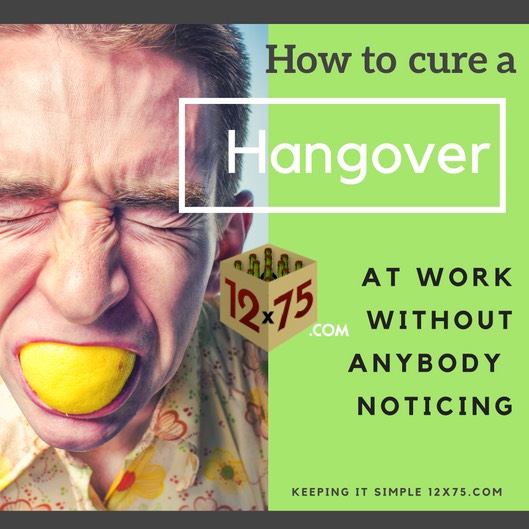
Hangover at Work? How to Survive the Day (Discreetly)

Last modified date

how to cure a hangover at work
12×75 Survival Guide
How to Survive a Hangover at Work Without Anyone Noticing
You cannot cure it at your desk. But you can get through the day quietly, keep the damage down, and avoid becoming the meeting’s cautionary tale. Here is how, and the honest science of what actually helps.

There is a specific kind of dread that arrives at about 8:40am, roughly the moment you realise the 9 o’clock is not going to reschedule itself out of sympathy. Your head is a car alarm. Your mouth tastes like the inside of a wine cork. Somewhere between the third drink and the decision to “just get one more round in,” future-you was signed up for a full day of pretending to be a functional adult, and future-you is now present-you, and present-you would like a word.

We are not here to lecture you. We are a wine and spirits publication; we would be on shaky ground. We are here to be useful. So this is the practical, medically honest, quietly sympathetic guide to getting through a workday on a hangover without anyone clocking it, what genuinely helps, what is a myth wearing a lab coat, and the few things you must not do no matter how rough you feel.

The Damage

Why you feel like this (the two-minute version)

A hangover is not one problem, which is exactly why no single fix solves it. According to the US National Institute on Alcohol Abuse and Alcoholism, several things are happening at once. Alcohol is a diuretic, so you are mildly dehydrated. It wrecks the quality of your sleep, so you are running on fumes even if you were in bed for eight hours. It irritates your stomach lining and raises acid, hence the nausea. It triggers inflammation, the same body-wide malaise that makes you feel fluey when ill. And your body is still clearing acetaldehyde, a toxic by-product of breaking down alcohol. Add the sulphites and congeners in some drinks and you have a genuinely impressive stack of small miseries.

One more thing worth knowing before you get behind a wheel or a spreadsheet: your body processes alcohol at roughly one unit or standard drink an hour, and it does not care that your alarm went off. After a heavy night you can wake up still over the drink-drive limit and genuinely impaired, even if you feel merely awful rather than drunk. Hold that thought, because it becomes important later.

Set Expectations

The honest truth: only time actually works

Let us kill the fantasy quickly, because it will save you money and dignity. There is no cure. The Cleveland Clinic and the NIAAA agree on the unglamorous truth: the only thing that resolves a hangover is time, while your body finishes the clean-up. Everything else on this page, and every product ever marketed at your inbox, is relief, not repair. It can make the next hour more bearable. It cannot make the hangover shorter.

So the goal today is not to feel good. The goal is to feel slightly less terrible, hide it competently, and run out the clock.

The Playbook

The desk-survival playbook

None of this is heroic. It is the boring, evidence-backed stuff that genuinely nudges the dial, arranged so you can do it quietly at your desk without announcing your condition to the entire floor.

1. Rehydrate properly, and keep at it. Water is doing real work here, since dehydration is one of the drivers. Sip steadily through the morning rather than drowning yourself in one heroic pint. A glass of water with an electrolyte tab or a sports drink helps replace the salts you lost, though be clear-eyed about it: electrolytes aid hydration, they are not a magic switch. Keep a bottle on the desk and refill it. Bonus: frequent, sober trips to the water cooler look diligent, not hungover.

2. Eat bland carbs, not a heroic fry-up. Your stomach is inflamed and your blood sugar is low. The fix is gentle: toast, crackers, a banana, plain rice, or a bowl of broth or soup. Bland complex carbs settle the stomach and steady blood sugar without piling greasy fuel onto an already unhappy gut. The famous greasy breakfast tends to help most before you drink, not the morning after.

3. Painkillers: pick the right one, carefully. This is the one genuinely important safety point on the list, so read it twice. For the headache, an NSAID like ibuprofen or aspirin can help, but it can also irritate a stomach the alcohol has already roughed up, so take it with food and water, not on an empty stomach. Do not reach for paracetamol (the same drug sold as acetaminophen or Tylenol) if there is still alcohol in your system. The NIAAA and Harvard Health both warn that paracetamol plus alcohol puts real strain on the liver. Match the tool to the job, and if you are unsure or take other medication, ask a pharmacist.

4. Coffee: allowed, but stop expecting miracles. Caffeine will not sober you up and will not shorten the hangover; it does not lower your blood alcohol at all. What it can do is take the edge off the grogginess. The catch is that coffee is also a mild diuretic, so it can nudge you further into dehydration if you are not drinking water alongside it. One coffee, chased by water, is fine. Six coffees is a jittery, dehydrated panic with a headache on top.

5. Manage the optics. Half of surviving a hangover at work is not curing it but hiding it. Turn your screen brightness down; your eyes will thank you and you will squint less. If your office allows it, a pair of glasses or subtle tinted lenses covers a multitude of sins. Keep mints or gum going. A quick freshen-up, splash of cold water, clean shirt if you have one, buys you more credibility than any supplement. On video calls, there is no shame in “camera’s playing up today.”

6. Triage your day. Do the low-stakes, low-visibility tasks first while you are at your worst, and push anything requiring real judgement or charisma to the afternoon, when you will be measurably more human. Book yourself a quiet hour if you can. Say less in meetings; nod thoughtfully. This is not the day to volunteer for the big presentation or reply-all with a hot take.

7. Move gently and get air. A short walk and some daylight genuinely help the grogginess and the mood more than sitting rigid at your desk radiating regret. What does not help is trying to “sweat it out” with a hard workout: when you are dehydrated and under-slept, that is a fast route to feeling far worse, or fainting in front of colleagues, which rather defeats the “without anyone noticing” brief.

Save Your Money

Myths that will not save you

The internet has never met a hangover it could not sell something to. Here is what to ignore. Hair of the dog is the great classic and a genuine trap: a morning drink only masks the symptoms by topping your blood alcohol back up, which delays the hangover rather than curing it, and starts a habit worth avoiding. You still have to pay the bill later, usually with interest. A giant greasy breakfast the morning after mostly just gives a queasy stomach more to deal with. Coffee, as above, wakes you up without fixing anything. “Sweating it out” in the gym or sauna risks making dehydration worse. And the fashionable one, the hangover IV drip: clinics will happily cannulate you for a fee, and while a drip does rehydrate you faster, University of Rochester Medicine notes there is no strong evidence it resolves a hangover meaningfully better than simply drinking fluids, eating and resting. Most people recover perfectly well without a needle. As for the pills and powders promising to erase a hangover: none is proven to do it.

Non-Negotiable

The one thing you must not do

Everything else here is about comfort and appearances. This is about safety, and it is not optional. Because your body clears alcohol slowly, you can wake up the next morning still over the legal drink-drive limit and still impaired, even when you feel hungover rather than drunk. Feeling rough is not the same as being sober. So if there is any chance you are still under the influence, do not drive, and do not operate machinery or do safety-critical work. Take public transport, get a lift, work from home if you can, or go in late. A morning-after driving ban and the “morning after” crash statistics exist precisely because so many people get this wrong. No meeting is worth it.

Know The Line

When it is not just a hangover

A hangover is miserable but self-limiting. Something more serious is not. If you are with someone, or you are worried about yourself, the warning signs of alcohol poisoning are a genuine emergency: confusion or unresponsiveness, being unable to wake someone, vomiting repeatedly or while unconscious, seizures, slow or irregular breathing, and pale, cold or clammy skin. If you see those, call emergency services, do not leave the person alone, and keep them sitting up or on their side rather than lying on their back. This is the point where the jokes stop entirely.

And one gentle, non-preachy word, from people who write about drink for a living and are the last to moralise: if hiding a hangover at work is becoming a regular fixture rather than the occasional self-inflicted Tuesday, that is worth a quiet, honest think, and a chat with your GP or a support line if it would help. No judgement here. Just looking out for you.

Next Time

How to not be here again next week

Since the only guaranteed cure is not having the hangover in the first place, a little future-proofing goes a long way. Eat before and while you drink, so the alcohol hits a fuller stomach. Alternate each alcoholic drink with a glass of water, which paces you and blunts the dehydration. Have a big glass of water and a snack before bed, not just in the desperate morning. Know your limit and respect the fact that “one more round” is where most hangovers are actually born. And on the nights you would rather wake up clear-headed, the alcohol-free options are genuinely good now, not the sad cordials of a decade ago.

Worth a look for a lower-regret night: our tasted-and-ranked best non-alcoholic wines, the best non-alcoholic beers, and, if the labels confuse you, the difference between non-alcoholic and alcohol-free. All the ritual, none of the 8:40am dread.

FAQ

Hangover-at-work FAQ

What is the fastest way to cure a hangover before work? There is no cure and nothing makes it truly fast. The best you can do is water, bland carbs, an NSAID like ibuprofen taken with food, a little coffee, fresh air and rest. Time does the actual healing.

Should I take paracetamol for a hangover? Better not, if alcohol may still be in your system, because paracetamol (acetaminophen) plus alcohol strains the liver. Ibuprofen or aspirin with food is generally the safer choice for the headache. If in doubt, ask a pharmacist.

Does coffee help a hangover? It can lift the grogginess, but it does not sober you up, does not shorten the hangover and is mildly dehydrating. Have one, with water alongside, and do not rely on it.

Does a hangover IV drip work? It rehydrates you faster, but there is no strong evidence it beats simply drinking fluids, eating and resting. For a normal hangover, save your money.

Can I still be drunk at work the morning after? Yes. Alcohol clears at roughly one unit an hour, so after a heavy night you can be over the drink-drive limit and impaired the next morning. Do not drive or do safety-critical work if there is any doubt.

How long does a hangover last? Usually up to about 24 hours, often easing through the day as your body clears the alcohol and rehydrates. If symptoms are severe or unusual, treat that as a signal to seek advice.

What is the best food for a hangover at work? Bland and gentle: toast, crackers, bananas, plain rice, soup or broth. They settle the stomach and steady blood sugar without overloading it.

This is general information, not medical advice. If you take regular medication, have a health condition, are pregnant, or are ever worried about your symptoms or your drinking, speak to a pharmacist, GP or a support service. Sources include the NIAAA, the Cleveland Clinic, Harvard Health and University of Rochester Medicine, alongside NHS and Mayo Clinic guidance.

By Vim, Editor of 12×75. Drink responsibly, and maybe not on a Tuesday.